
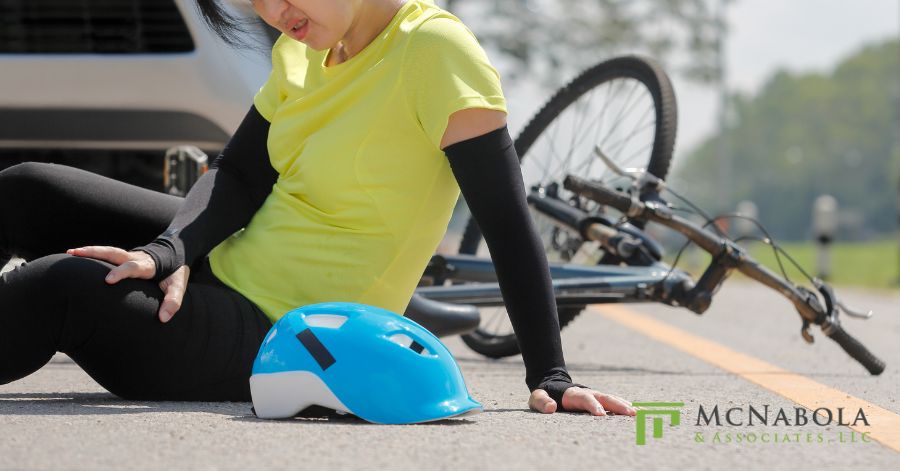
A bicycle accident in Illinois can be a frightening and life-altering event. While your physical recovery is the priority, it's natural to worry about medical bills, lost wages, and the overall financial impact. Understanding your options for compensation under Illinois law is the first step toward regaining control.
As a professional and trustworthy legal resource, we want to provide you with clear, informative guidance on the potential avenues for recovery.
Proving Fault: The Foundation of Your Claim
Illinois is a "fault" state, meaning the party responsible for the accident is liable for the resulting damages. To secure compensation, you must demonstrate that another party—typically a driver—was negligent and that their negligence caused your injuries.
Key elements of negligence include:
- Duty: This usually means the driver owed you a duty of care (e.g., following traffic laws).
- Breach: The driver violated that duty (e.g., running a red light, failing to yield, "dooring" you).
- Causation: The breach is the direct cause of the accident and your injuries.
- Damages: You suffered measurable losses as a result.
Understanding Comparative Negligence
In Illinois, you can still recover compensation even if you were partially at fault for the accident. This is because of the modified comparative negligence rule. As long as you are found to be less than 51% responsible, you can pursue a claim. Your compensation, however, will be reduced by the percentage of your fault. For example, if your total damages are $100,000 and you are found to be 20% at fault, you can recover $80,000.
Primary Sources of Compensation
When a motor vehicle is involved, several types of insurance coverage may apply to your claim:
1. The At-Fault Driver's Auto Liability Insurance
In most cases, when a driver is responsible, their auto liability insurance will be the primary source for covering your:
- Medical Expenses: Past, present, and future treatment, including rehabilitation.
- Lost Wages: Wage or income lost due to the accident and time off work for recovery.
- Property Damage: Refers to the cost of repair or replacement of your bicycle and gear.
- Pain and Suffering: Compensation for suffering, such as physical pain, emotional distress, or more.
2. Your Own Auto Insurance (Uninsured/Underinsured Motorist Coverage)
If the driver who hit you is either uninsured or their insurance limits are too low to cover your total damages, your own auto insurance policy's Uninsured/Underinsured Motorist (UM/UIM) coverage may apply. This coverage can be essential, especially in serious injury or hit-and-run cases. It's vital to note that this coverage can apply to you as a cyclist, even though you were not in your vehicle at the time.
3. Other Insurance Policies
- Health Insurance: This will typically cover your initial medical bills, but your health insurer may seek reimbursement from your personal injury settlement (a process called subrogation).
- Homeowners or Renters Insurance: In rare circumstances, if the accident involved a defect on private property or another non-vehicular scenario, this policy may offer coverage.
Seeking the Full Compensation You Deserve
Insurance companies are usually focused on minimizing their payouts, which is why having an experienced legal advocate is critical. At McNabola & Associates, LLC, we will investigate the accident and gather crucial evidence. We can also accurately calculate the full extent of your damages (both economic and non-economic), and negotiate aggressively on your behalf. We will fight back against any unfair attempts to shift the blame to you or undervalue your claim.
If you or a loved one has been injured in a bicycle accident in Illinois, do not navigate the complex claims process alone. Call us at (312) 888-8700 to protect your rights and explore all your options for maximum compensation.